When Meat Eaters Become Vegans | An Introduction to a Vegan Diet in January
Share
It's January, and for many people around the world, this marks the beginning of a new year and a fresh start! For some of you, this may mean a new workout routine, but for us here at Aarja Health, we're going to embrace "Vegan January."
You may be wondering, what on earth does Vegan January mean? Simply put, the purpose of Vegan January is to get people to eat a vegan diet for the month of January in the hopes of inspiring them to eat a little more plant-based all year round. With all the different diet types out there, we're kicking off Vegan January with a simple introduction to veganism!
What does veganism mean?
When you think of veganism, what do you think of? For some people, the word veganism can easily be confused with vegetarianism. The main difference here is that while vegetarians don’t eat any meat, vegans don’t eat any animal products. So while a vegetarian might choose regular milk (produced by a cow), a vegan will choose a product that isn’t produced by an animal (like almond or oat milk). This means that any product with an animal involved in its production – like cheese, eggs, honey, and butter – is a no-go for vegans!
Also, feel free to read our 7 useful tips and tricks on how to switch to a vegan diet.
What do vegans eat?
Now that we’ve covered what veganism is, the next question most people have is “What can vegans eat”? The beauty of a vegan diet is that it pushes the boundaries of what many consider “normal.” Needless to say, meat and potatoes are not for vegans. Instead of chicken wings, you can opt for cauliflower bites and you can swap out beef and chicken burgers for lentil patties. With veganism, you’ll be able to explore your creativity in the kitchen and come up with amazing vegetable creations! Let’s take a closer look at what vegans can and can’t eat!
Vegans can eat:
• Fruits and vegetables
• Beans, lentils, peas
• Nuts and seeds
• Bread, rice, pasta
• Dairy alternatives (e.g. almond milk, coconut yogurt)
• Vegetable oils
Vegans cannot eat:
• Beef, pork, lamb, other red meat
• Chicken, duck and other poultry
• Fish, shellfish, crabs, clams, mussels
• Eggs
• Cheese, butter, dairy products, mayonnaise (due to the presence of egg yolks)
• Honey
Why become vegan?
There are many reasons why someone would want to switch from their regular diet to a plant-based diet. Let's take a closer look at the reasons why some people choose to become vegan.
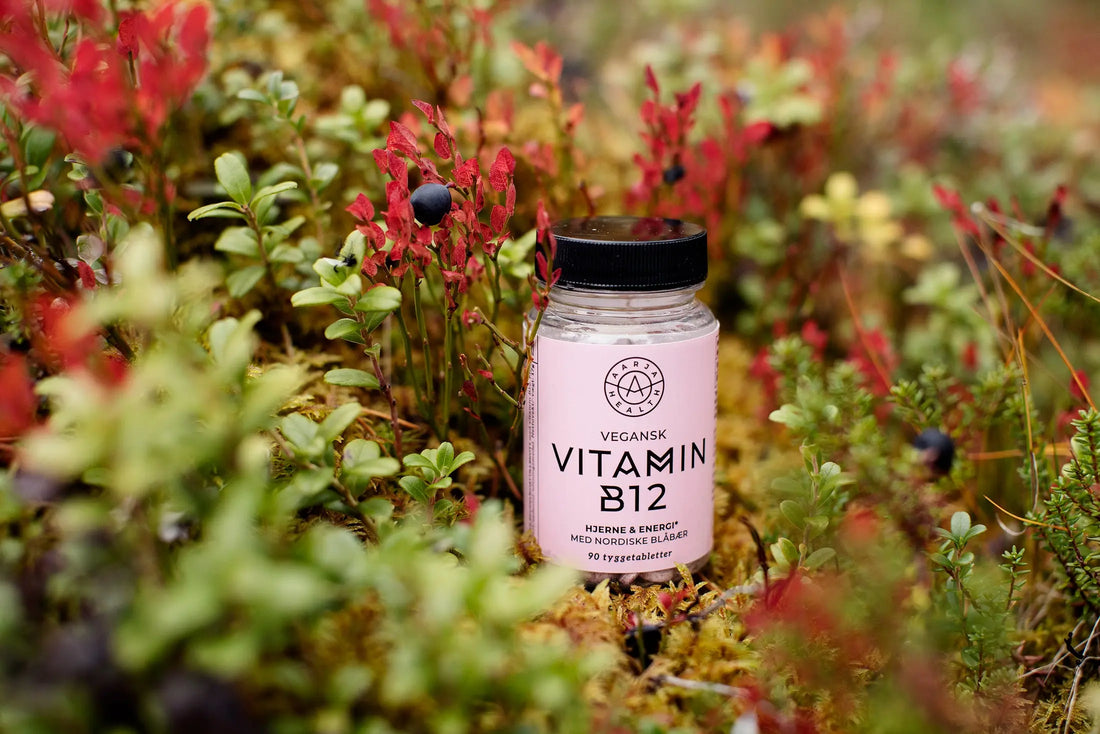
In a vegan diet, it can sometimes be difficult to cover all the different food groups you need, which is why B12 supplements can be particularly useful for those of you who avoid animal products.
For the animals
It’s common knowledge that the food industry as it operates today doesn’t necessarily prioritize the well-being of animals. With the high demand for animal products, the focus has shifted from family-owned farms to mass meat production, which, needless to say, hasn’t necessarily been the best for the animals. Whether we as a population want to admit it or not, there is a way to take a stand against exploitation and cruelty to animals… namely by refusing to support the industry that creates the problem. Even if you don’t personally have anything against the food industry, going vegan can support all the animal lovers out there!
For general health
While there has been much debate about whether or not a vegan diet contains the right balance of nutrients to support health, we can tell you that when done right, a vegan diet can truly be good for your health! In fact, the high intake of fruits and vegetables, healthy fats from nuts and seeds, and fiber make for an excellent health-supporting combination of delicious foods. Many people even find that switching from their regular diet to a vegan diet also shifts their focus back to whole foods (versus processed and packaged) which also yields significant health outcomes. In fact, studies have shown that veganism has positive effects on heart disease, type 2 diabetes, cancer, and vegans often have lower weights than their meat-eating friends.
For the environment
Did you know that animal products have one of the biggest environmental impacts of all foods? Take a moment to think about how many resources it takes to raise animals for food. We have to grow crops to feed them, water those crops, and provide water for our livestock, all of which puts a huge strain on our natural resources. On top of that, because there is a high demand for animal products, more land has to be used to raise and feed the animals, contributing to deforestation, habitat loss, and in some cases, species extinction. Switching to a more plant-based lifestyle can require only about 1/3 of the land needed to support other diets.
A personal challenge
If these reasons are not enough to convince you, let us present a fourth and final option – a personal challenge! Aarja Health as a whole relies on the knowledge of the Sami people, most of whom were very keen meat eaters. Since they were reindeer herders, it should come as no surprise that there was no shortage of reindeer meat. However, with their nomadic lifestyle, the Sami people always had to adapt to their environment, which meant taking full advantage of the Nordic plant life that nature provided.
During periods when plants were available, they often found that the unique nutrients of plant-based foods provided them with health benefits in ways that few other foods could. You see, it can be very difficult to fully understand the effects of a major dietary change like veganism until you try it yourself. Even if you have no intention of becoming a full-time vegan, you may be able to learn some new skills in the kitchen, find a new favorite food, or improve your health.
So why not give it a try? Who's joining us for Vegan January?