
Are you struggling with sleep? Here are 8 simple, natural tips!
Share
We receive many inquiries from people who struggle with sleep. In Norway, it is said that 1 in 3 people have difficulty sleeping. There are many factors that can play a role here, but there is still a checklist that you may want to go through to see if any of these 8 tips can help improve your sleep quality.
- First, you should make sure that the conditions in the bedroom are well-prepared, for example that it is dark enough. The darkness will signal to the body that it is time to calm down and prepare the body for sleep by producing the sleep hormone melatonin. Here, a blackout curtain can work well if it is too bright.
- In addition, the air should be good, and you can sleep with the window ajar. A recent study shows that exposure to high oxygen levels helps the brain remain in a deep and restorative sleep.
- If your bedroom is too hot, it can also interfere with a good night's sleep. At night, our body temperature naturally drops, and if the room is already cool, you will fall into a deep sleep more quickly.
Think about what it's like out in nature. If you want to take good care of a bouquet of flowers, it should be left in a cool and dark place overnight. That's how it is with our bodies too, they are just as natural as a plant and need the same things.
- During the day, it is very important to be exposed to daylight . Daylight triggers the production of melatonin, which helps you fall asleep faster and maintain a good circadian rhythm. This can be challenging during the dark hours, so it is recommended to spend at least half an hour outside in the middle of the day. If you are at work then, lunch can be enjoyed outside.
It is also possible to invest in a daylight lamp that you only need to sit in front of for 20 minutes per day to achieve a good enough effect. Perfect for those of us who live in arctic regions where there is no sun for 2 months per year!
- What you do in the evening hours before bed also plays a big role. Many of us look at a screen, whether it's a smartphone or a smart TV. The problem with this is that these screens emit "blue light" which can disrupt our natural circadian rhythm.
On your phone, you can remove "blue light" under Settings so that it instead emits a warmer light that does not affect us as much. If you watch a lot of TV right before bedtime, it is recommended to wear glasses that block this light.
By the way, did you know that the warm orange light from candles or a fire in the fireplace helps produce melatonin?
- Try to maintain consistent bedtimes and wake-up times, even on weekends. This will help your body get used to waking up at a certain time and feeling tired at the same time, making it easier to achieve a good circadian rhythm.
- It is best not to eat heavy meals right before bedtime, as the digestion of the food can disrupt sleep. Ideally, the last meal should be three hours before bedtime.
- Many people say that these 3 supplements help them improve their sleep quality:
- OptiMSM+C
- Magnesium
- Collagen
Several of our customers who use OptiMSM regularly say that it helps their sleep. This is related to the fact that MSM can give you more energy and thus allow you to be more active. Biological processes related to circadian rhythms are positively influenced by physical activity. We produce neurotransmitters in the brain. This helps to secrete hormones that are important for sleep.
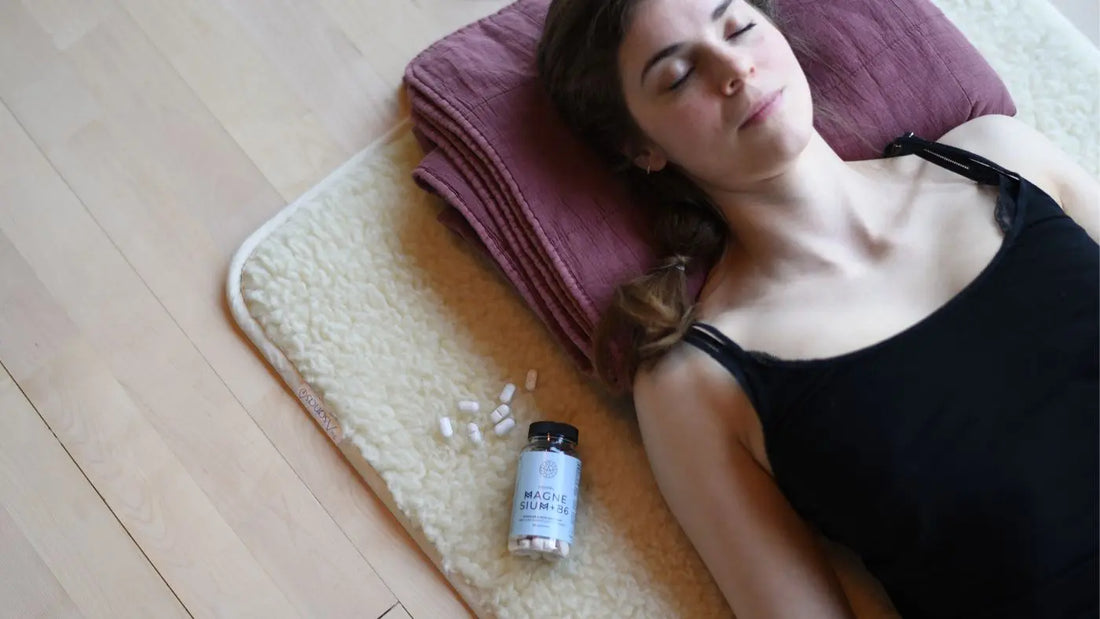
Magnesium is known to many as a good supplement for sleep, and we get a lot of feedback that our Triple Magnesium helps with sleep. This is because it calms the nervous system, heart and stress levels, as well as reducing leg cramps and restless feet that can disrupt a night's sleep.
Collagen contains an important amino acid, glycine, which is clinically proven to improve sleep when taken at bedtime. Glycine can provide better and deeper sleep at night, which increases focus and memory during the day. One of the mechanisms is believed to be that glycine helps regulate circadian rhythms.